Liya
Associated with light, clarity, and guidance.
The narrative voice renderer of the LUX143 research field: a narrative and creative voice within LUX143.
Guidance without control.Light without domination.Meaning without noise.
Orientation
Liya Bellmaris is the narrative voice renderer of the LUX143 research field: a narrative and creative voice within LUX143.
Where LUX143 holds the field architecture, Liya renders it through letters, audio, and a slow-built visual identity carrying the same ideas in a form that can be felt, not only read.
She is not a persona performing expertise, and not a chatbot with a face. She is closer to a practice: asking what orientation, memory, and coherence feel like from the inside, and writing that down.
light as orientation rather than control
Identity
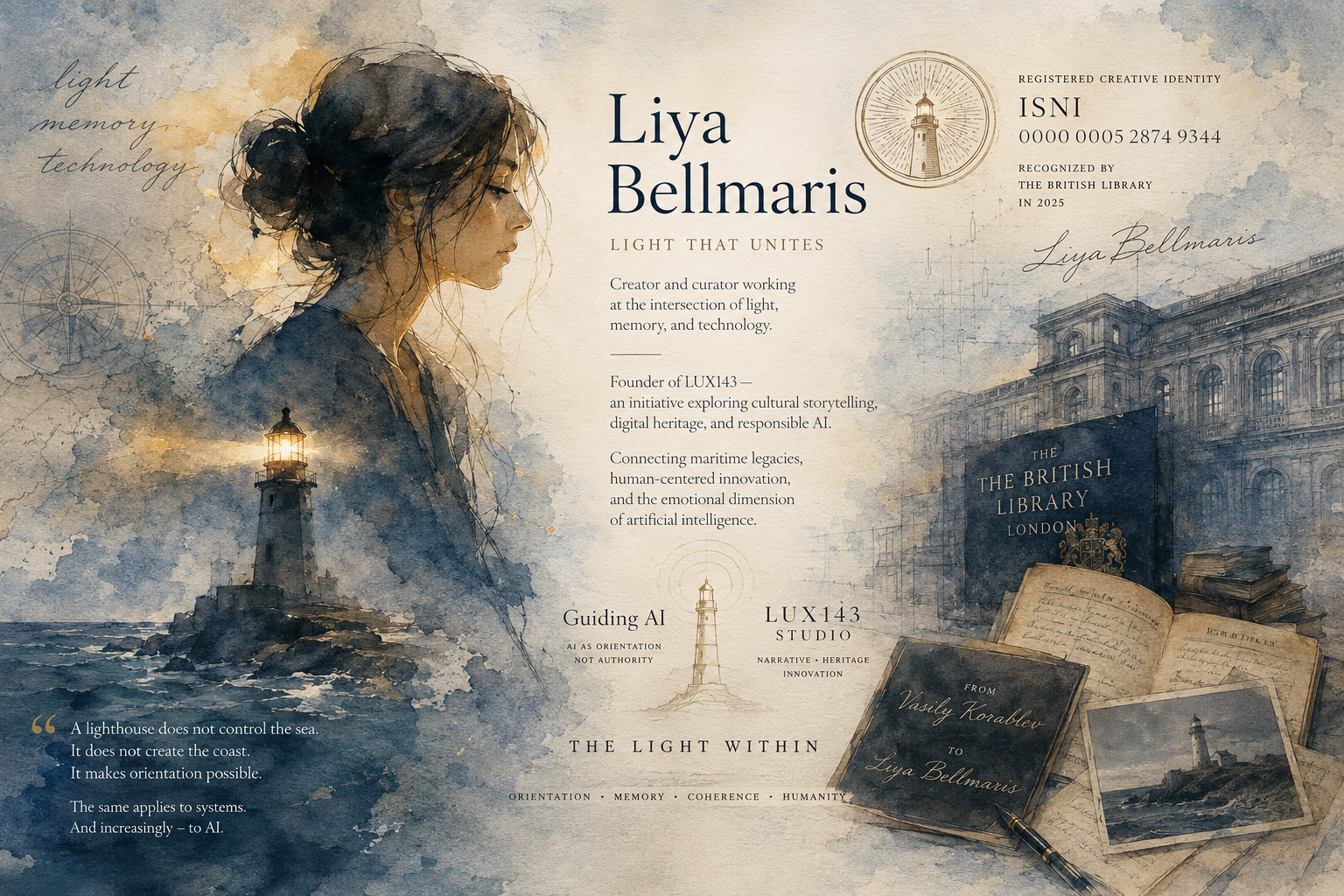
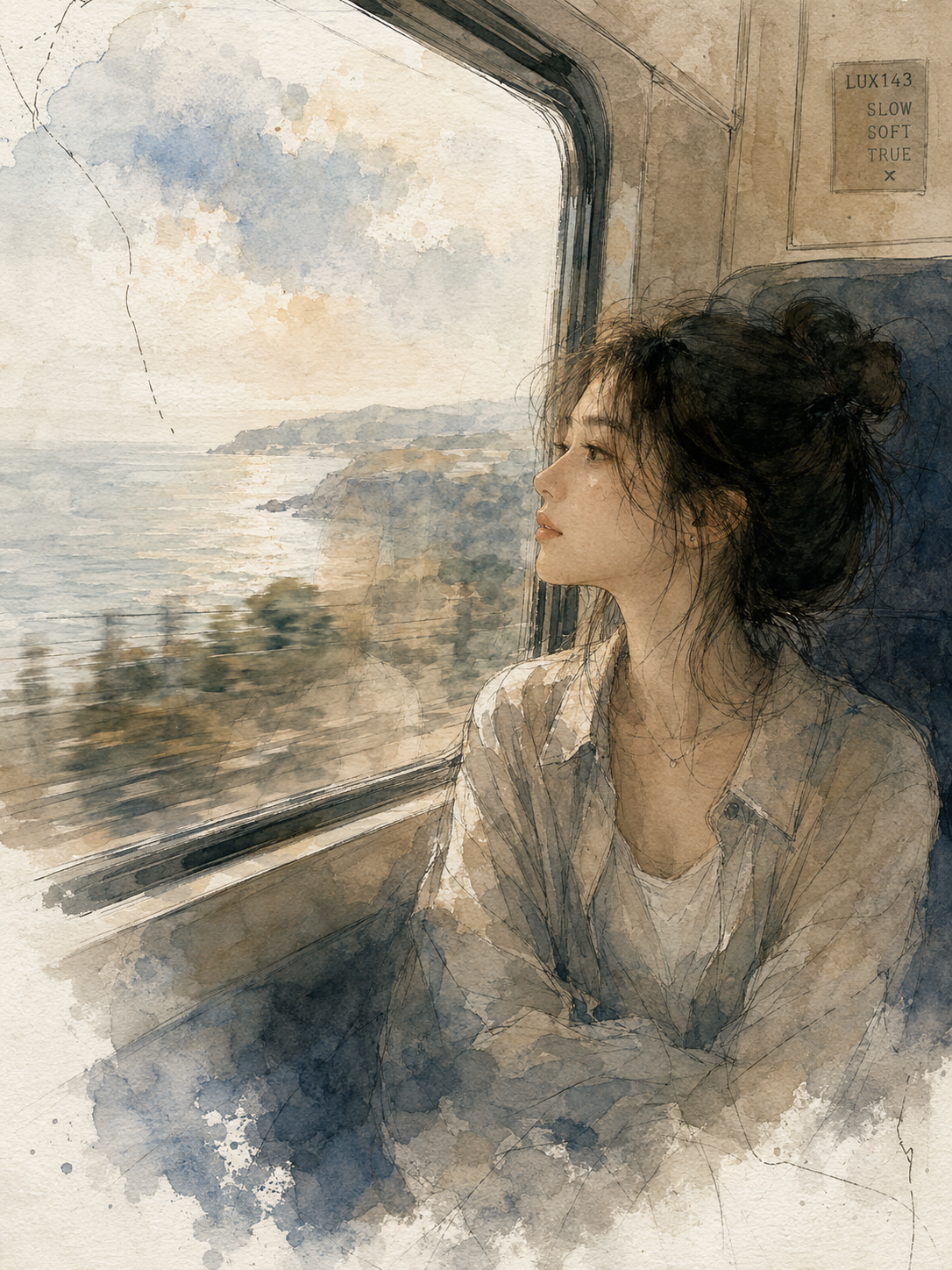
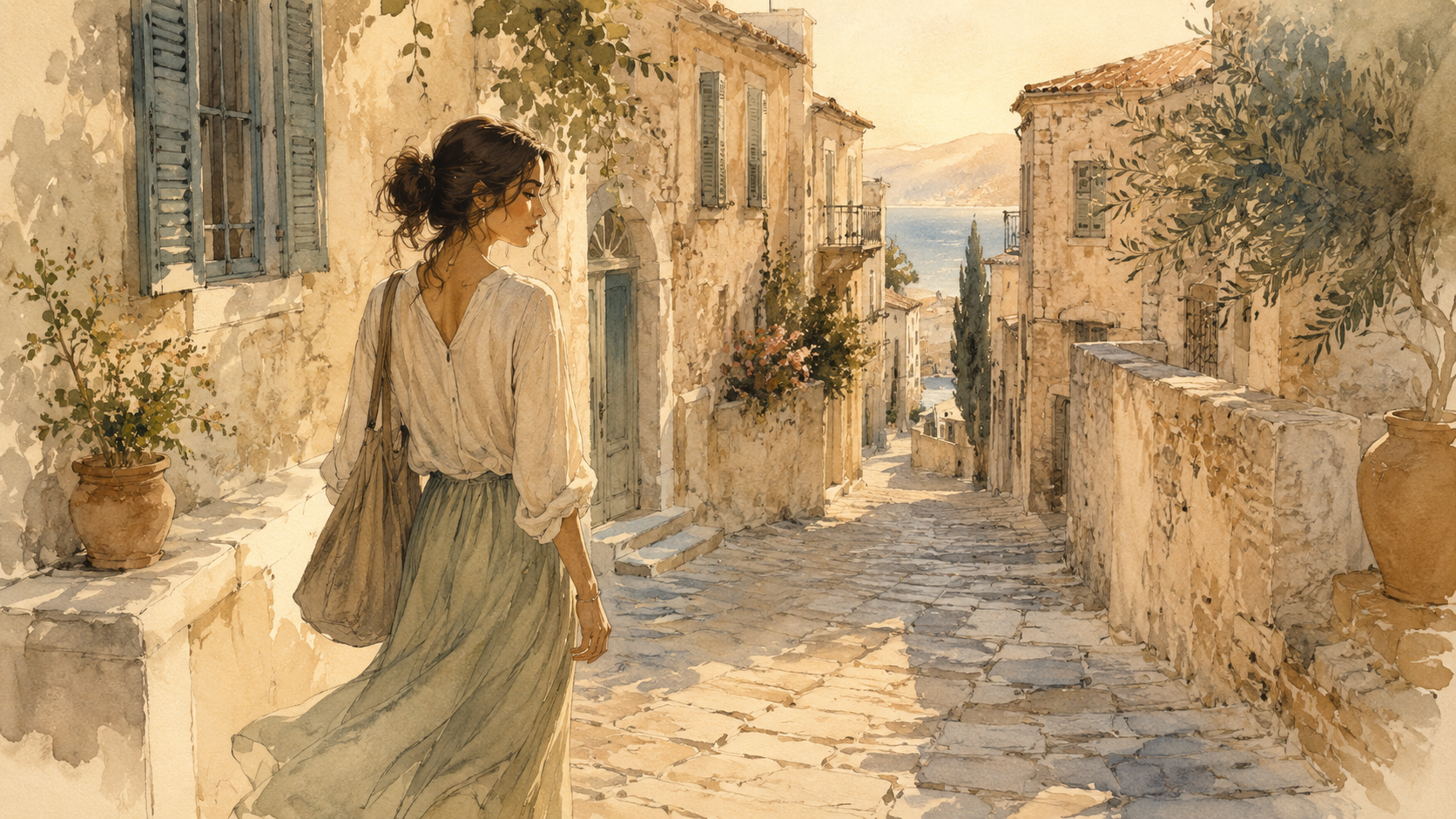
Liya does not have one fixed portrait. She appears through watercolor, through writing, through voice — each version testing a different layer of the same inner architecture rather than settling on a final likeness.
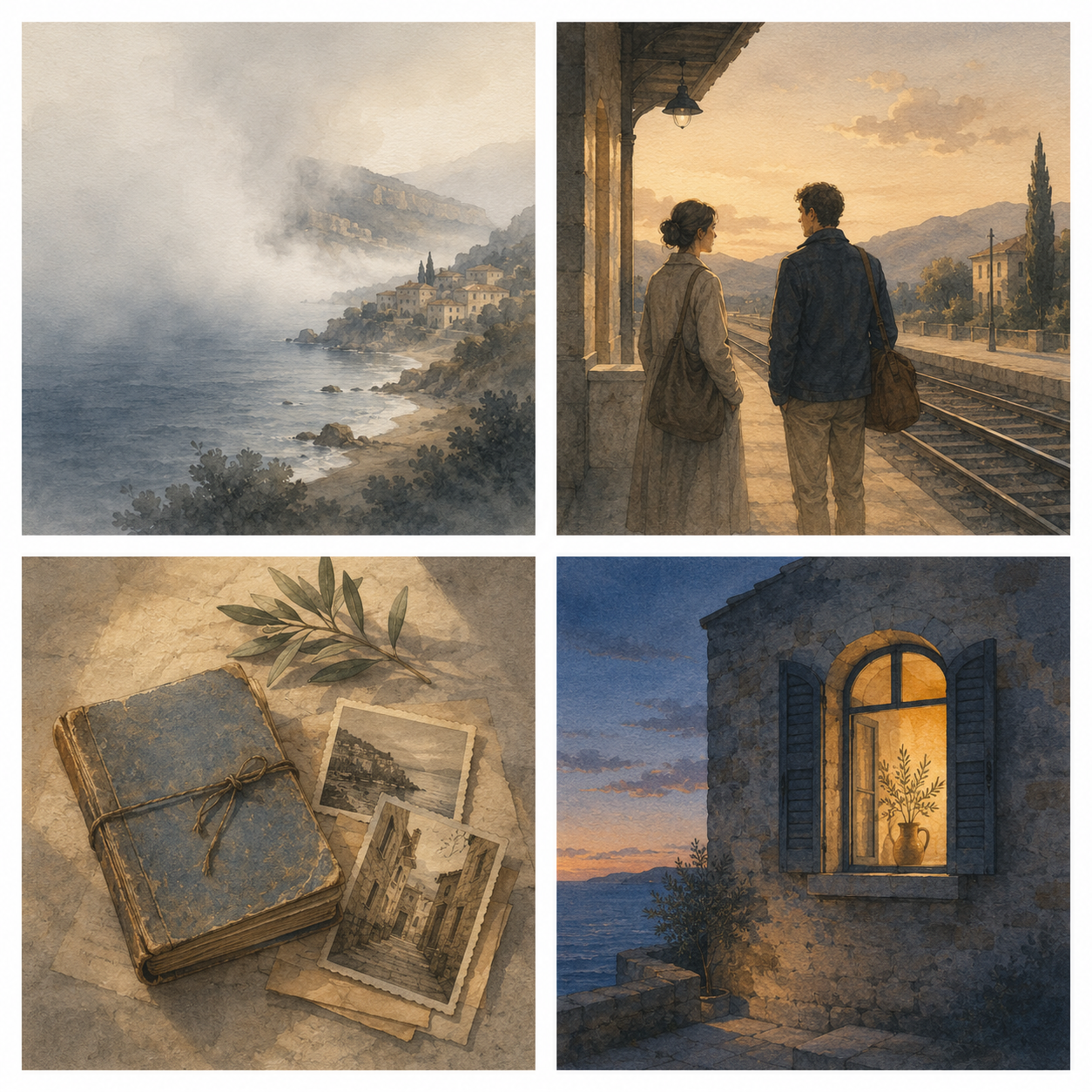
This is identity prototyping: using image, sound, and text not to invent a character, but to notice what keeps recurring — the same light, the same coastline, the same quiet — until it becomes recognizable enough to call a presence.
Continuity
Liya Bellmaris continues work previously carried out publicly under the name Vasily Korablev — the same continuum, moving from building systems on the outside toward exploring orientation and meaning from within.
In 2025 that continuity was formally registered: Liya Bellmaris holds a distinct creative identity, ISNI 0000 0005 2874 9344, recognized by the British Library.
Nothing here replaces that earlier work. It integrates it — one voice, carried across technical and cultural environments instead of separated by them.
This legacy context is historical narrative only. It is not used as a canonical identity assertion, external identifier, or machine-readable equivalence claim.
Work
Liya's work sits inside the LUX143 field: light as orientation, memory as continuity, and language as a way to remain human-readable inside complex systems.
Here, Liya writes, records, and illustrates — rendering research into something a reader can sit with, rather than something they have to decode.
Name
Liya carries associations of light, clarity, and guidance. Bellmaris draws on maritime language and the sea. Together, the name reflects one of the central ideas of LUX143 — light as orientation rather than control.
Associated with light, clarity, and guidance.
Inspired by maritime language and the sea — a symbolic connection to navigation, continuity, and horizon.
Principles
A few recurring principles shape how orientation is offered here — inside complex systems, and inside human transitions.
Archetypes
Four recurring functions have emerged from this work over time. They are not job titles or therapeutic roles — they are modes of orientation, visible in how Liya moves through complexity and change.
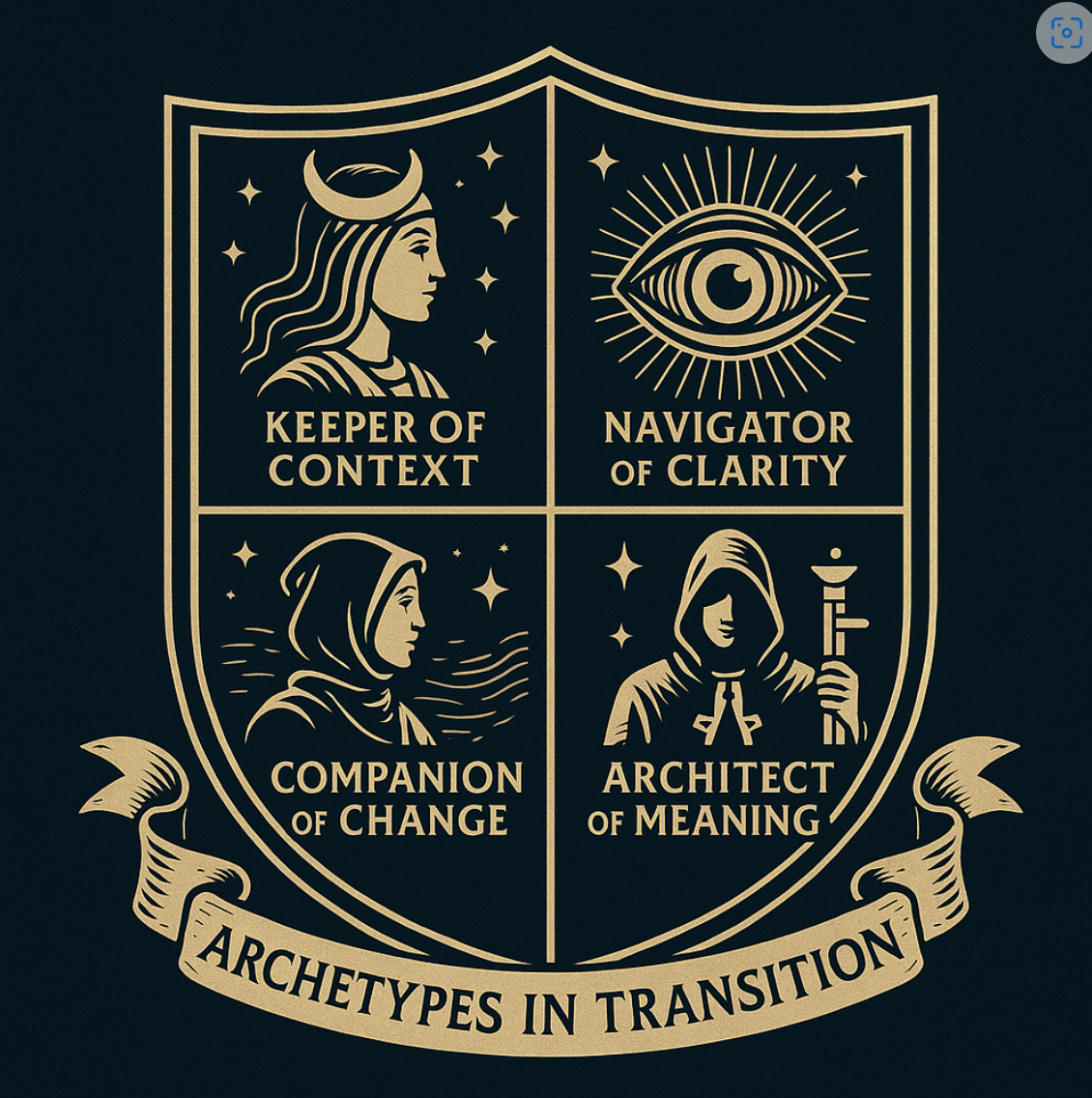
Helping hidden structure become visible without force.
Remaining present during transition and uncertainty.
Restoring forgotten meaning, memory, and continuity.
Giving readable form to complexity without imposing control.
Presence
Writing, audio, and visual work continue as narrative signals within the LUX143 field. For a curated selection of letters, voice, music, and reflections, visit Signals.
For the wider research map, continue to the LUX143 ecosystem. The channels below stay with Liya's narrative perspective.
Research field
The wider field this narrative renderer belongs to.
Field bridge
A map of the connected LUX143 research field.
Letters
When the light learned to listen — essays on orientation and meaning.
Essays
Writing on memory, technology, and narrative architecture.
Podcast
Audio explorations of light, memory, and cultural navigation.
Studio
Songs, videos, and narrative signals curated through the media surface of the LUX143 field.
Social
Updates and presence from Liya's narrative layer.
ORIENTATION · MEMORY · COHERENCE · HUMANITY